
MusicMaster Blog
When Perfect Rotations Sound Anything But Perfect publicado em July 27th, 2026
By Jerry Butler
I’ve worked with hundreds of stations over the years, and I’ve seen the same thing happen more times than I can count.
A programmer spends hours fine-tuning a MusicMaster database. Every rule is in place. Artist separation looks great. Category rotations are balanced. The schedule runs clean, and every report says everything is exactly as it should be. Then they listen to the station.
Instead of sounding natural, it sounds… programmed.
There’s nothing technically wrong with it, but something just feels off.
The reason is simple: music scheduling isn’t about making a schedule look perfect. It’s about making a station sound great.
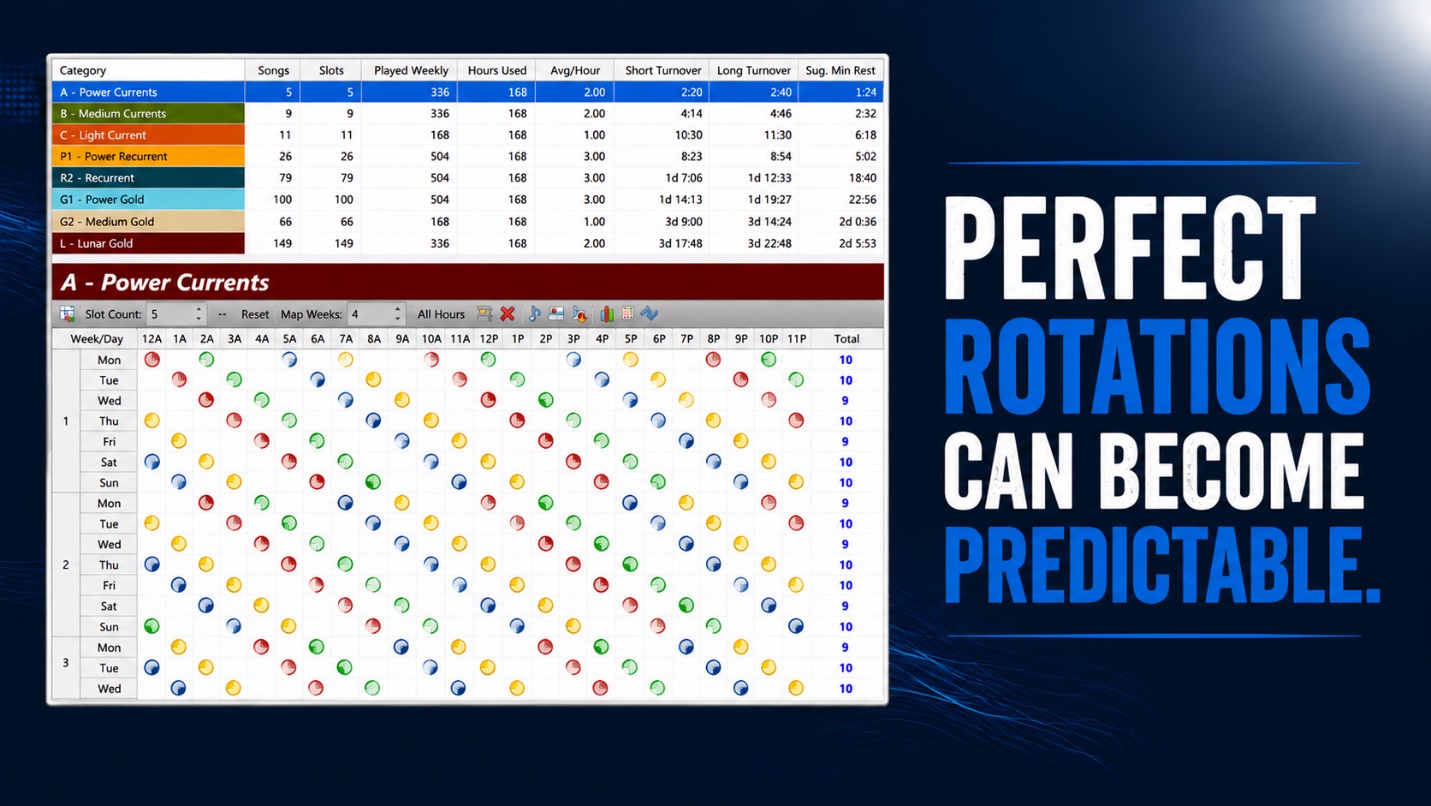
As programmers, we spend a lot of time looking at reports. We check rotations, artist separation, category balance, tempo flow, and all the other things MusicMaster does so well. Those reports are valuable because they help us build consistency and avoid obvious scheduling mistakes.
Your listeners don’t hear those reports. They hear whether the station flows naturally. They notice when the same artists seem to show up at the same times every day. They notice when every hour starts to feel alike, even if they can’t explain why. They’re judging your station by what they hear, not by how clean your reports look.
One of the biggest traps in music scheduling is trying to make everything perfectly even. Maybe every Power category rotates exactly every few hours. Every Gold category follows the exact same order every day. Every recurrent appears at nearly the same time each afternoon.
On paper, that schedule looks beautiful. On the air, it can become very predictable.

Listeners are incredibly good at recognizing patterns. They may not realize why the station feels repetitive, but eventually they’ll start thinking, “Didn’t I just hear this?” That’s not because your rotations are wrong. It’s because they’re too perfect.
Think about the stations you’ve always admired. They probably weren’t perfectly balanced every single hour, but they sounded effortless. The music flowed. The energy changed naturally. Songs surprised you once in a while. The station felt alive.
That’s what we’re trying to recreate today.

I’ve always believed that radio programming is both a science and an art. The science is building a solid database, creating smart clocks, setting the right rules, and letting MusicMaster do what it does best. The art is knowing when to make a programming decision that no software can make for you.
MusicMaster gives us the tools to build consistency, but it still takes a programmer to make the station sound human. Software can build the schedule, but it can’t replace experience, instincts, or great ears.
The best programmers know how to blend science with art. That’s where great radio happens.
One piece of advice I give programmers is to spend less time staring at reports and more time listening.
Take a drive and listen to your station. Stream it while you’re working around the house. Better yet, listen over several days. You’ll hear things no report will ever show you. Maybe two songs have similar intros. Maybe similar songs end up too close together. Maybe the station loses energy at the same point every hour.
Those aren’t software problems. They’re programming decisions.
If your ears tell you something isn’t working, don’t ignore them just because the reports look perfect.
One of the reasons I’ve always liked MusicMaster is that it gives programmers options. Features like optimum goal scheduling, timing goals, rotation weight, and various clock options like combo, proportional, or migrating positions aren’t there just to satisfy reports. They’re there to help your station sound less predictable while still protecting your format.
Use those tools, but don’t be afraid to make adjustments when your ears tell you something isn’t working. Sometimes the best schedule isn’t the one with the cleanest report. It’s the one that simply sounds better.
At the end of the day, we’re not programming for ourselves, the on-air personalities, or MusicMaster. We’re programming for listeners.
MusicMaster is an incredible tool. It can enforce rules, balance rotations, and build outstanding schedules. What it can’t do is replace programming judgment. That’s still your job.
The best programmers I’ve known all have one thing in common. They know when to trust the software, and they know when to trust their ears.
As you finish reading this blog, ask yourself one simple question:
If I got in my car tomorrow morning and turned on my station, would I want to keep listening?
If the answer is yes, you’ve done your job.
And in the end, that’s far more important than having a perfect-looking schedule.
If you would like more information or help making your station less predictable, reach out to your MusicMaster Scheduling Consultant today.