Your viewing experience of the MusicMaster website, as well as the web as a whole, would be much improved if you upgraded your browser.

MusicMaster Blog

When Perfect Rotations Sound Anything But Perfect posted on July 27th, 2026

By Jerry Butler

I’ve worked with hundreds of stations over the years, and I’ve seen the same thing happen more times than I can count.

A programmer spends hours fine-tuning a MusicMaster database. Every rule is in place. Artist separation looks great. Category rotations are balanced. The schedule runs clean, and every report says everything is exactly as it should be. Then they listen to the station.

Instead of sounding natural, it sounds… programmed.

There’s nothing technically wrong with it, but something just feels off.

The reason is simple: music scheduling isn’t about making a schedule look perfect. It’s about making a station sound great.
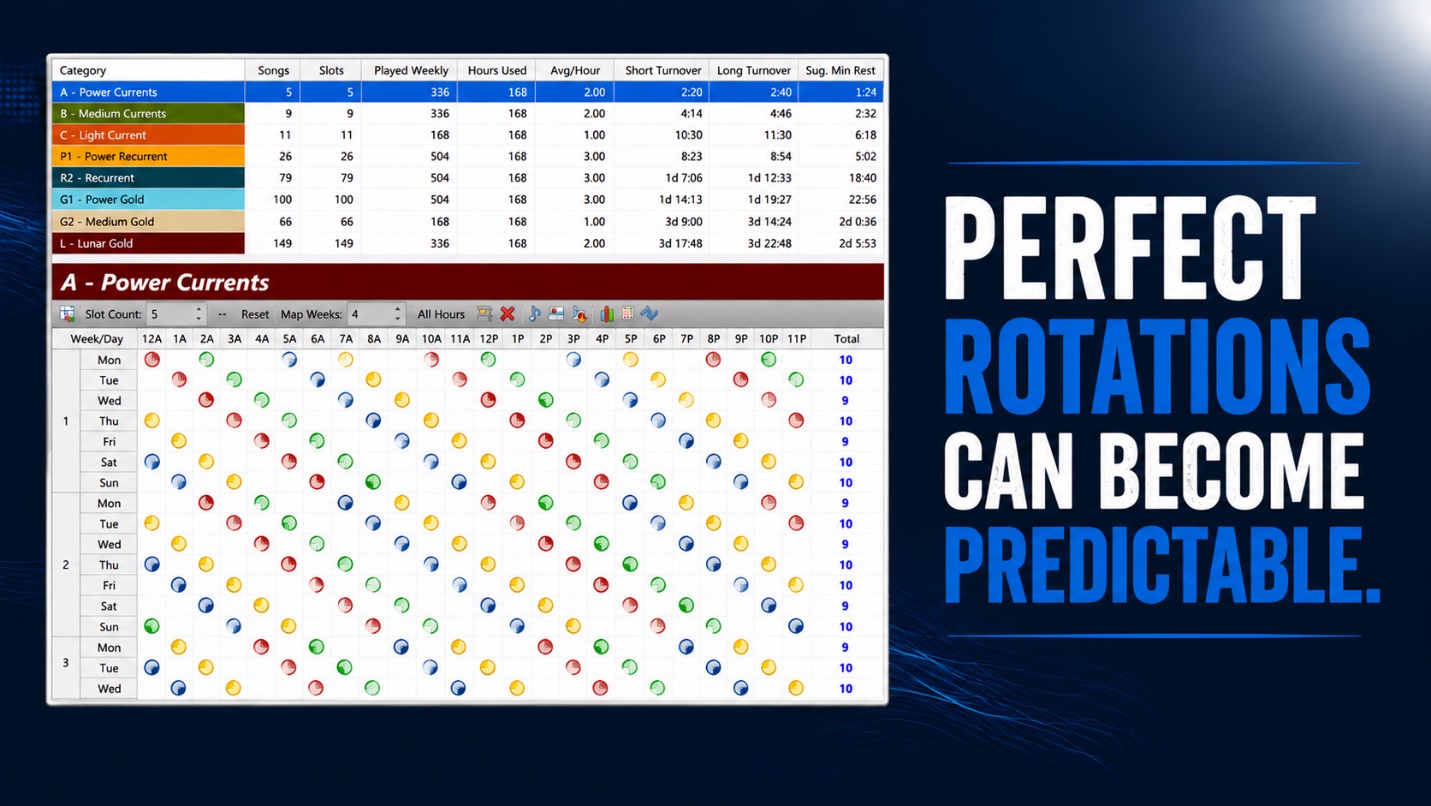
As programmers, we spend a lot of time looking at reports. We check rotations, artist separation, category balance, tempo flow, and all the other things MusicMaster does so well. Those reports are valuable because they help us build consistency and avoid obvious scheduling mistakes.

Your listeners don’t hear those reports. They hear whether the station flows naturally. They notice when the same artists seem to show up at the same times every day. They notice when every hour starts to feel alike, even if they can’t explain why. They’re judging your station by what they hear, not by how clean your reports look.

One of the biggest traps in music scheduling is trying to make everything perfectly even. Maybe every Power category rotates exactly every few hours. Every Gold category follows the exact same order every day. Every recurrent appears at nearly the same time each afternoon.

On paper, that schedule looks beautiful. On the air, it can become very predictable.

Listeners are incredibly good at recognizing patterns. They may not realize why the station feels repetitive, but eventually they’ll start thinking, “Didn’t I just hear this?” That’s not because your rotations are wrong. It’s because they’re too perfect.

Think about the stations you’ve always admired. They probably weren’t perfectly balanced every single hour, but they sounded effortless. The music flowed. The energy changed naturally. Songs surprised you once in a while. The station felt alive.

That’s what we’re trying to recreate today.

I’ve always believed that radio programming is both a science and an art. The science is building a solid database, creating smart clocks, setting the right rules, and letting MusicMaster do what it does best. The art is knowing when to make a programming decision that no software can make for you.

MusicMaster gives us the tools to build consistency, but it still takes a programmer to make the station sound human. Software can build the schedule, but it can’t replace experience, instincts, or great ears.

The best programmers know how to blend science with art. That’s where great radio happens.

One piece of advice I give programmers is to spend less time staring at reports and more time listening.

Take a drive and listen to your station. Stream it while you’re working around the house. Better yet, listen over several days. You’ll hear things no report will ever show you. Maybe two songs have similar intros. Maybe similar songs end up too close together. Maybe the station loses energy at the same point every hour.

Those aren’t software problems. They’re programming decisions.

If your ears tell you something isn’t working, don’t ignore them just because the reports look perfect.

One of the reasons I’ve always liked MusicMaster is that it gives programmers options. Features like optimum goal scheduling, timing goals, rotation weight, and various clock options like combo, proportional, or migrating positions aren’t there just to satisfy reports. They’re there to help your station sound less predictable while still protecting your format.

Use those tools, but don’t be afraid to make adjustments when your ears tell you something isn’t working. Sometimes the best schedule isn’t the one with the cleanest report. It’s the one that simply sounds better.

At the end of the day, we’re not programming for ourselves, the on-air personalities, or MusicMaster. We’re programming for listeners.

MusicMaster is an incredible tool. It can enforce rules, balance rotations, and build outstanding schedules. What it can’t do is replace programming judgment. That’s still your job.

The best programmers I’ve known all have one thing in common. They know when to trust the software, and they know when to trust their ears.

As you finish reading this blog, ask yourself one simple question:

If I got in my car tomorrow morning and turned on my station, would I want to keep listening?

If the answer is yes, you’ve done your job.

And in the end, that’s far more important than having a perfect-looking schedule.

If you would like more information or help making your station less predictable, reach out to your MusicMaster Scheduling Consultant today.

New Feature: Media Sets posted on July 23rd, 2026

Media Sets
by Paul Ziino

A new feature found in MusicMaster Client-Server version 3.4 is “Media Sets.” What are they and how do I use them? Glad you asked!

A Media Set is a way you can have alternate versions of songs schedule automatically or replace songs with an alternate version easily. First things first, we need to set them up.

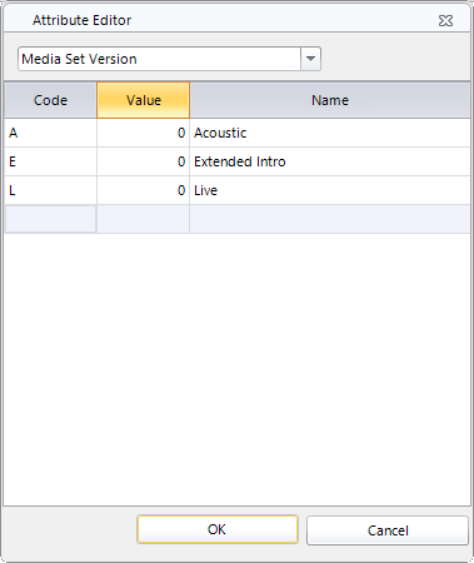
In our example we have different versions of songs. We have our standard studio versions as well as acoustic, live, and extended intro versions. We create codes for these in Library/Attributes under Media Set Version. Note I’ve not created a code for the studio version as we will assume that all songs are studio versions unless coded otherwise.

A screenshot of a computer

AI-generated content may be incorrect.

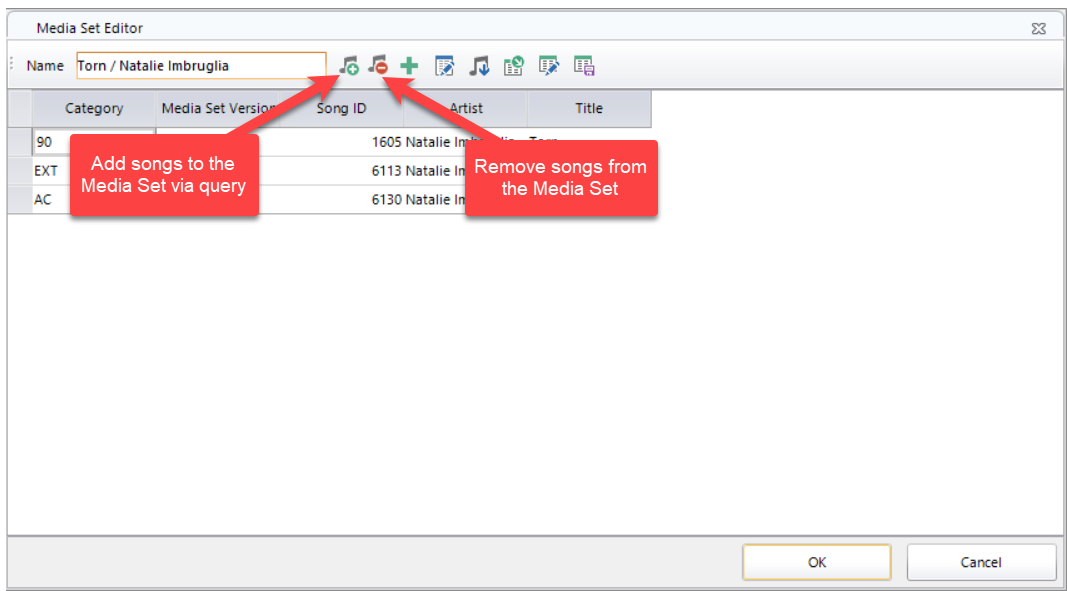
I have three versions of “Torn” by Natalie Imbruglia in my station. I code them accordingly and then click into the Media Set ID field of the first of those, then the edit helper (three dot box) to add songs to this Media Set. Once in the Media Set Editor, click the icon to add songs to the media set, then query the library for the other instances of “Torn.” Select them and OK.

A screenshot of a computer

AI-generated content may be incorrect.

Now we see all three copies are in the same Media Set and that they are coded as desired.

A screenshot of a computer

AI-generated content may be incorrect.

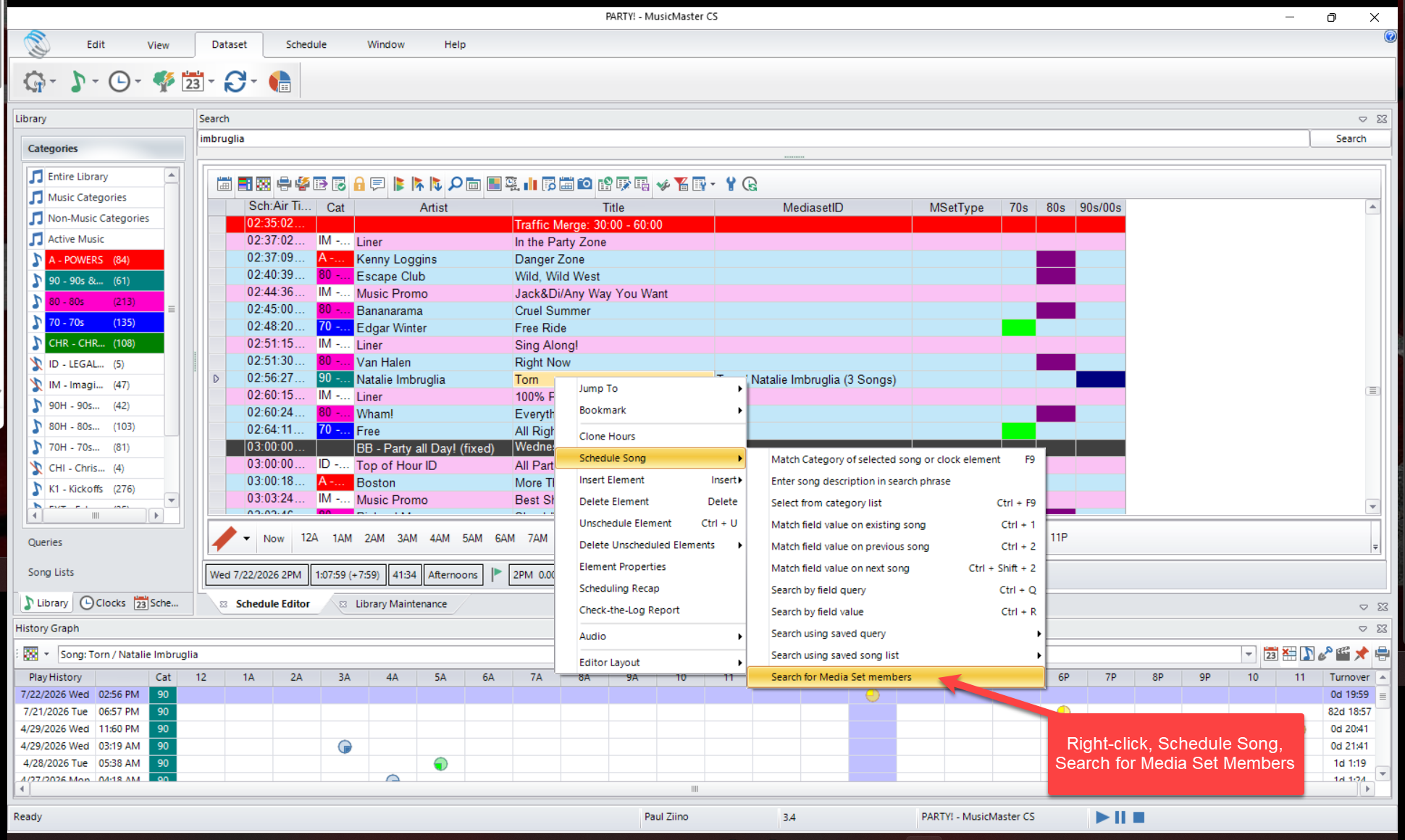
When Torn is scheduled in the log, I can quickly switch it for one of the other versions of the song by right-clicking on it, clicking Schedule Song, then Search for Media Set members. Note, this option is only available on songs contained within a media set. If you do this on a song that is not part of a media set, that search option will not be present in the menu.

A screenshot of a computer

AI-generated content may be incorrect.

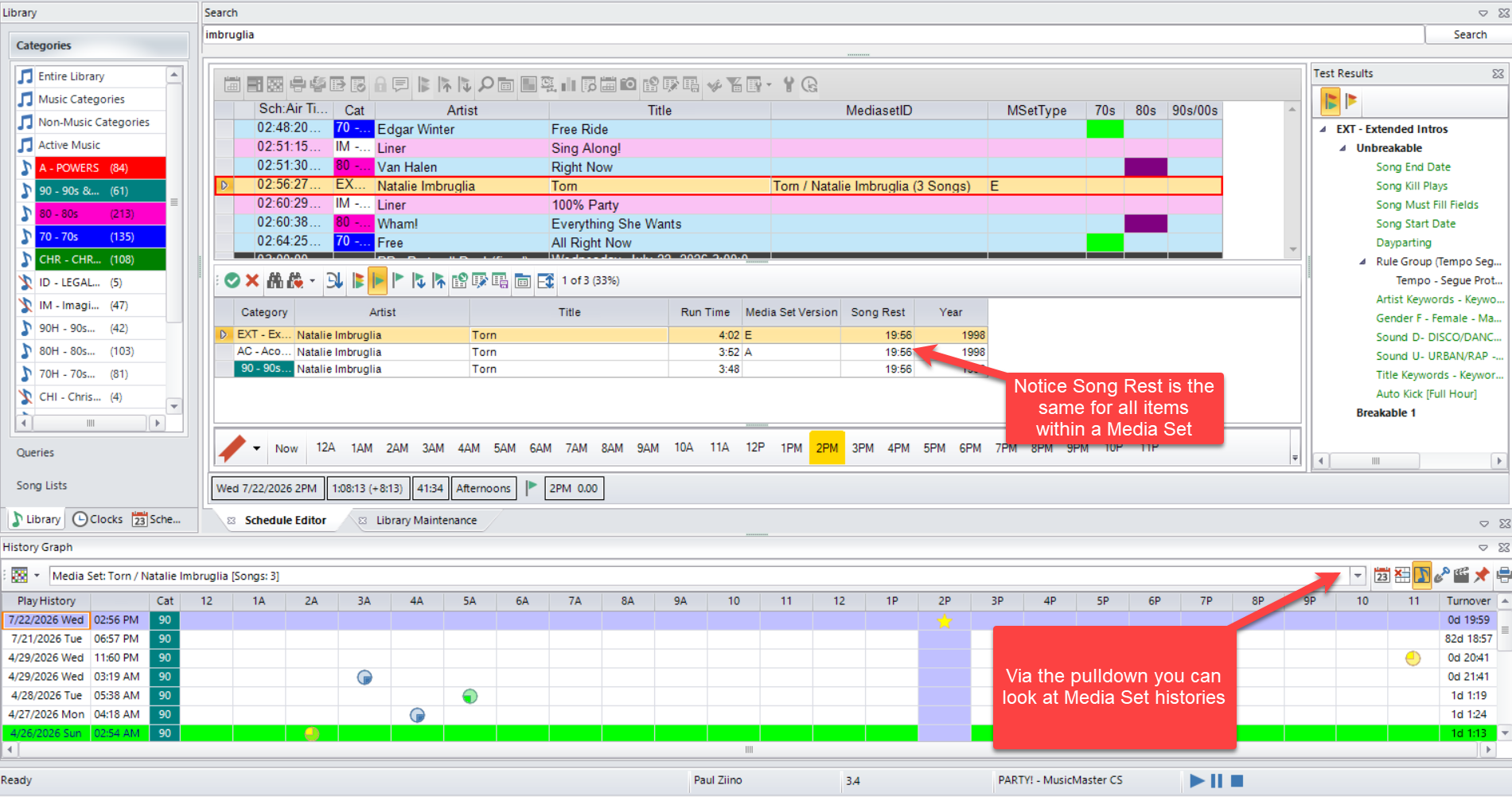
Your replacement list of songs will appear. Media Set members share Song Rest and you can use the drop-down at the far right of your history graph to see the history of the Media Set or the individual songs within.

A screenshot of a computer

AI-generated content may be incorrect.

That’s the basics of using Media Sets. Now let’s dive into how you can let the clocks do some of that work for you.

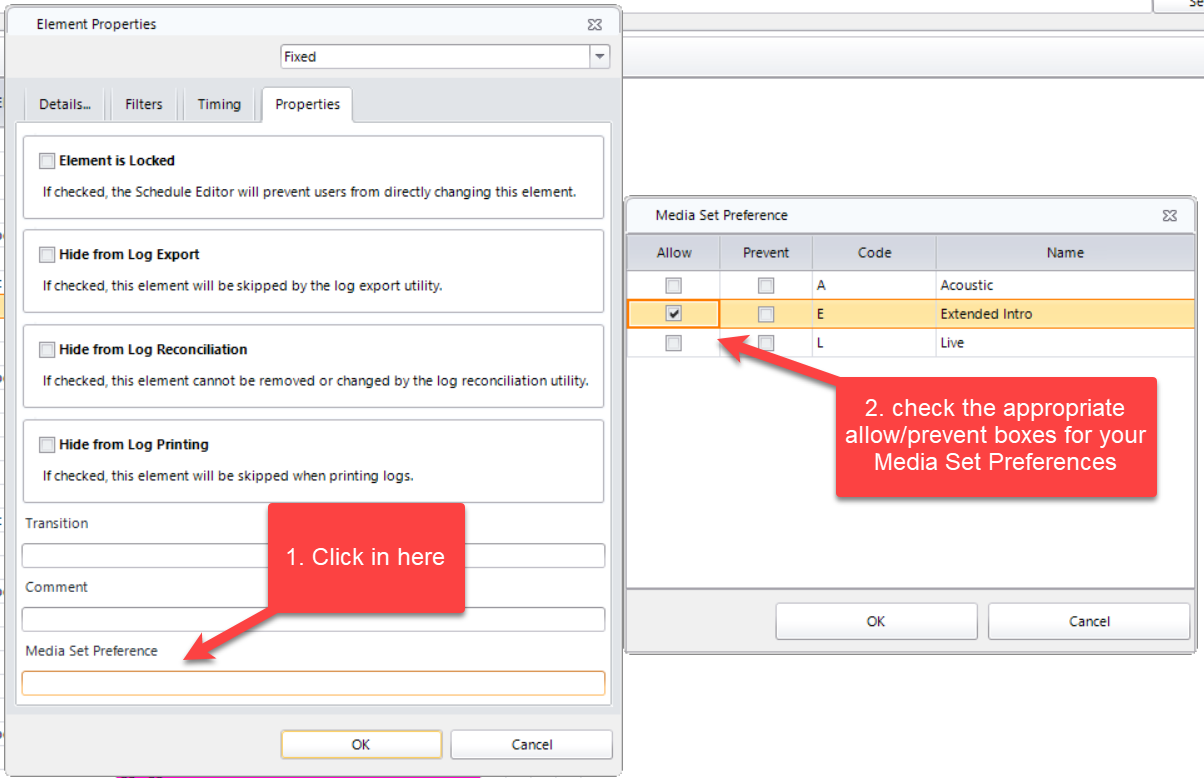
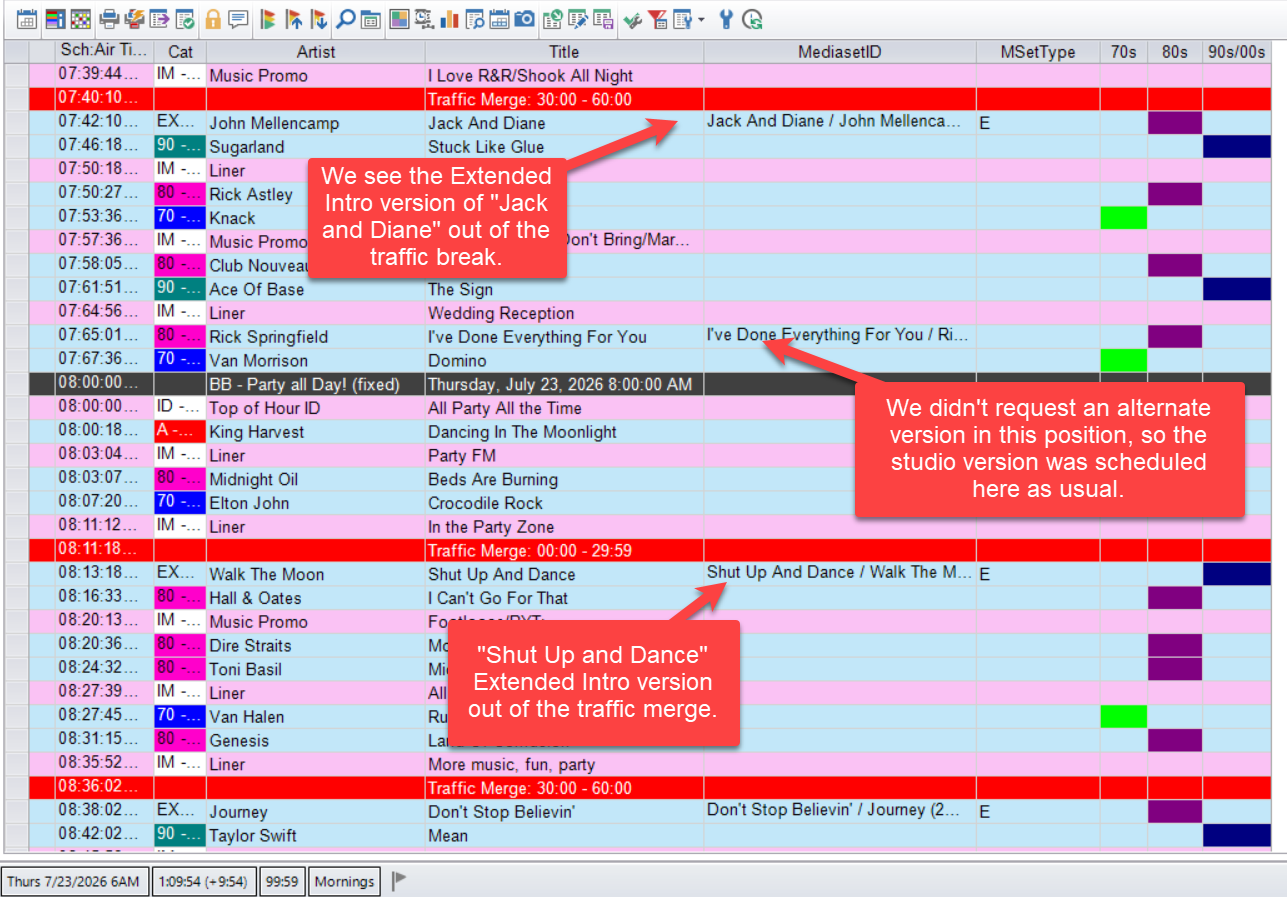
Coming out of my commercial breaks, I’d like to encourage MusicMaster to schedule songs that have an extended intro if possible. To do this, I can open that element in the clock via double-clicking or clicking that edit helper icon, then go to the Properties tab. At the bottom you’ll see Media Set Preference. Click into that field and check the Allow and/or Prevent box for the Media Set codes you do/do not want. In this case, I wanted to Allow Extended Intros, so I’ll check that box. Then OK.

A screenshot of a computer

AI-generated content may be incorrect.

Now when scheduling using this clock, those positions will schedule normally, but if the song selected is part of a Media Set that contains a song coded for Extended Intro, that will be the song scheduled. Other positions will schedule normally unless we are calling for a specific Media Set Version or we edit a different item from the Media Set into the schedule by hand.

A screenshot of a computer

AI-generated content may be incorrect.

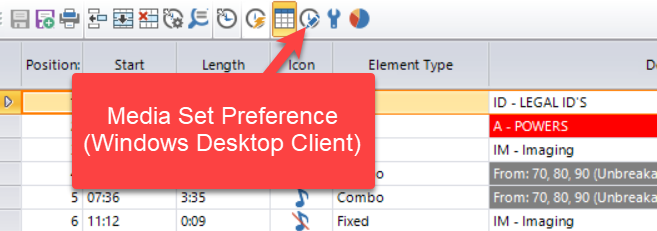
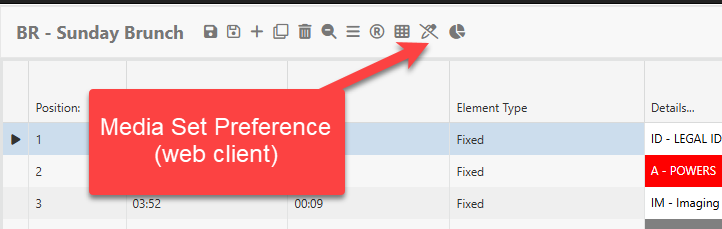
We can go another step further with the clock. We can click the Media Set Preference icon then set it for the entire clock all at once. We could indicate we want to focus on Acoustic versions of songs during our Sunday Brunch program, so we set the Media Set Preference accordingly. Now when that clock is used, if a position is to be filled by a song that is part of a Media Set that contains a version coded as Acoustic, that version will be scheduled.

A screenshot of a computer

AI-generated content may be incorrect.

A red square with white text

AI-generated content may be incorrect.

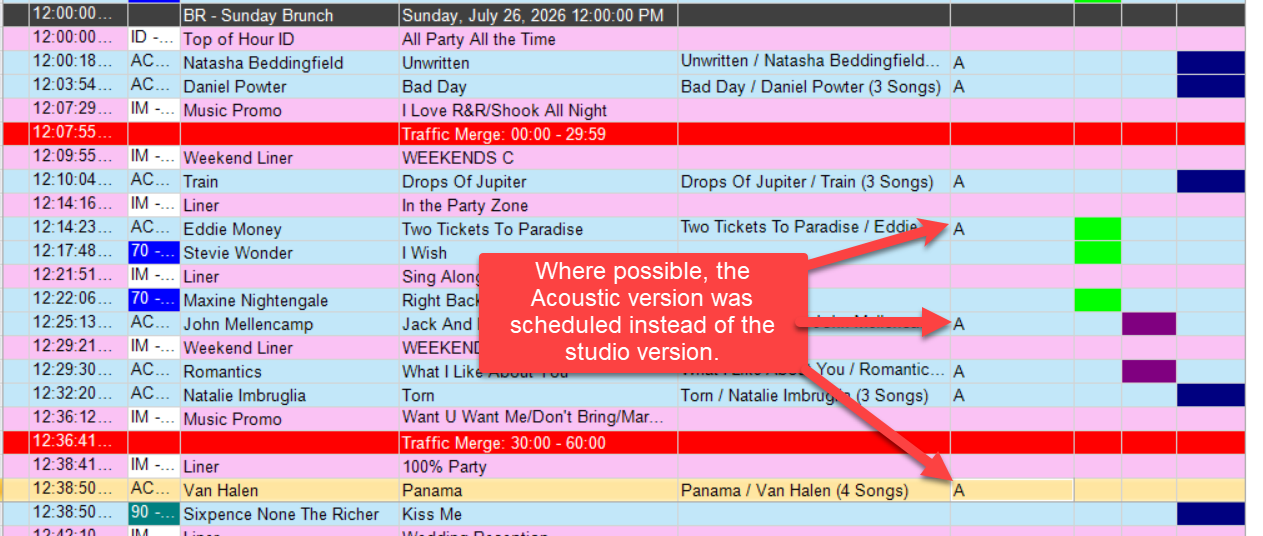
And once it is scheduled, you’ll see that Acoustic versions show up whenever the song that would have been scheduled from the clock category has a song coded as A within its Media Set.

Our developers at MusicMaster are always adding new and innovative features to the software. If you have an interesting idea, make sure to share it with your MusicMaster Scheduling Consultant. You never know, it might just show up in a future release!

What’s New in CS 3.4 posted on July 23rd, 2026

The latest release of MMCS contains an exclusive new feature for library version management, additional feature adds for the Web Client, and more.

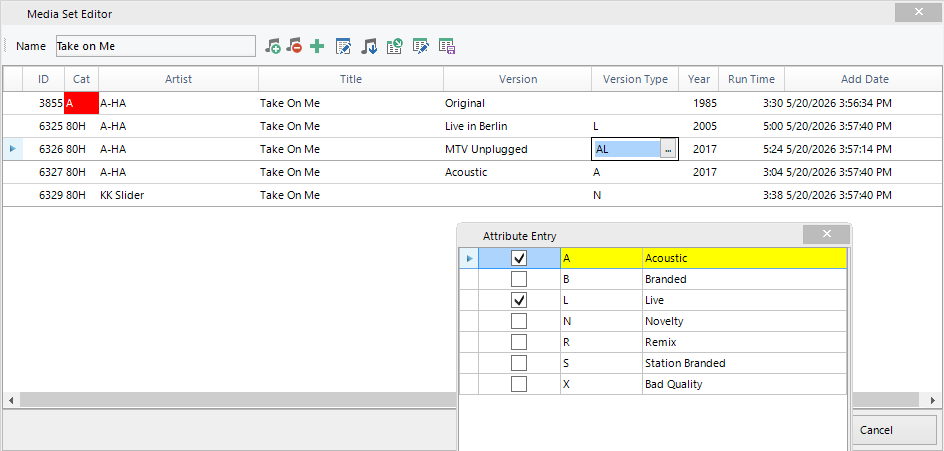
Media Sets are a new MusicMaster feature, exclusive to the CS edition, which allows you to manage and schedule songs where you have multiple different versions and recordings. The Media Set Editor allows you to assemble and combine multiple recordings of a song, designating version type attributes to each instance.

You can pull together song recordings from different categories in a Media Set, allowing you to have one or more in active rotation categories, and others in rest or hold categories that can still be easily scheduled as needed.

In the example above, only the Category A version of Take on Me is in an actual rotating category. By default, it will schedule as it normally would if it was not associated with the Media Set and the other recordings, being in a hold category, will not auto schedule at all.

When this song appears in the Schedule Editor, you can use the new option to Schedule from Media Set Members to place all recordings of this song into the replacement songs panel where you can manually choose to replace the original scheduled instance with another on demand.

You can also set Version Type Preferences on your Shows, Format Clocks and Clock Elements that can influence Media Set version selection and to swap out a song with an alternate version automatically. Again, using the example above, if you have a particular clock or show where you like to play live recordings when possible, you can set that as a preferred version type. Then, if the Automatic Scheduler attempts to schedule Take On Me in that time period, it will recognize that this song is part of a Media Set and if the copy it is trying to schedule does not have the preferred Live attribute, it will see if there is another recording available that does. In this case, there are two that have it. The Scheduler will swap out the original Category A song with the most rested of the available live recordings and attempt to schedule that song in the Category A position instead.

Media Sets have automatic history linking and a new display option in the History Graph so you can always see a combined view of all instances of Take on Me in History, as well as the ability to see where each individual recording played.

This new feature is available in both the Windows and Web clients.

Several new features have also been added to the Web Client in this release, including:

New drag and drop options for the Format Clock Editor. You can now drag many different items from the InfoBar to the Clock Editor to create and replace clock elements. The Elements panel is also available which lists all available clock element types

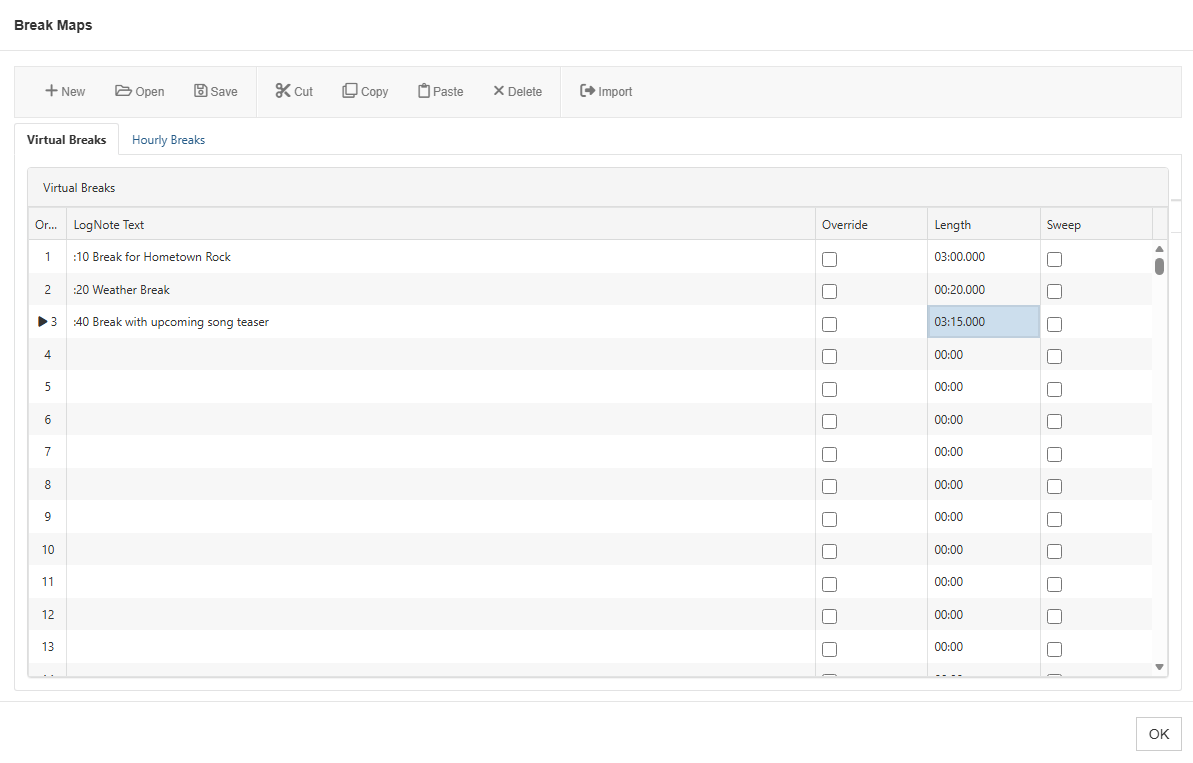
Virtual Breaks

Virtual Breaks allow you to export a single log from a station using multiple exports that can apply different breaknotes at selected times that can vary per export output.

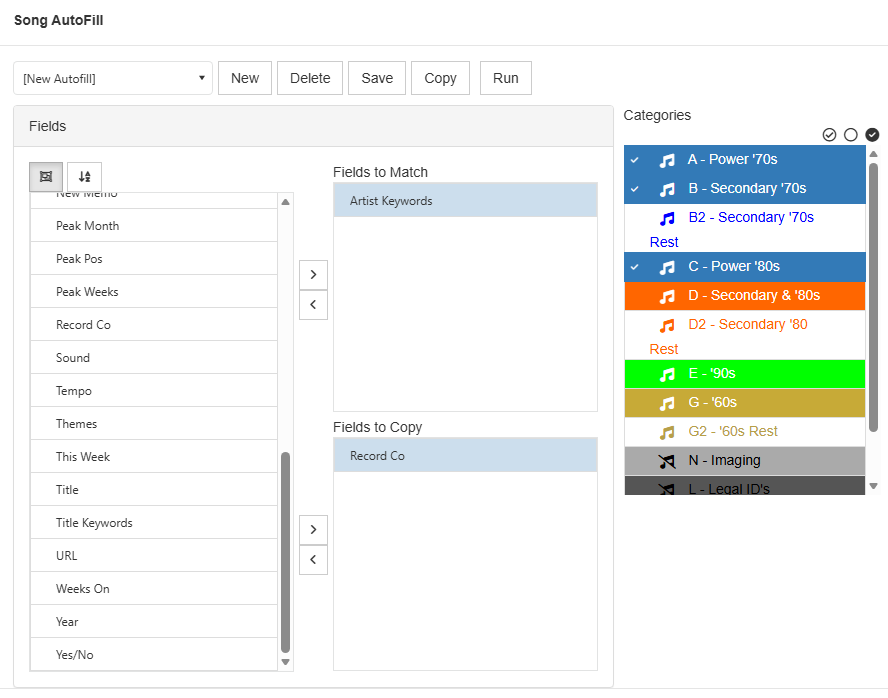
Library AutoFill

AutoFill allows you to match any given list of fields on a newly entered song against existing songs in your station, and then fill in values from the existing songs on the new one. Typical uses for this include information that would not change; i.e., if you match the Artist, the Birthdate information would be the same.

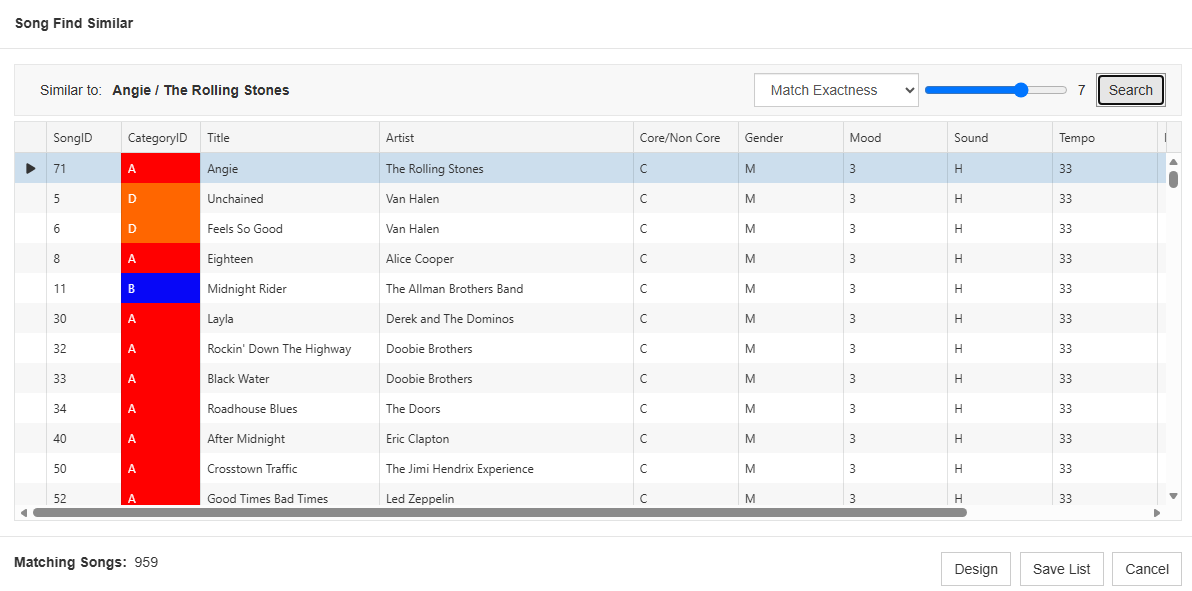
Find Similar

Find Similar shows you songs in your station that have values in selected attribute type fields that are a match or close match to the selected song.

Other improvements include:

New Hour Rotation rules for Keyword fields. You’ll have more control of your Keyword with these four new rules: Day Exclusion Mask, Exclusive Day Offset Window, Exclusive Play Offset Window and Play Exclusion Mask. These rules work the same way they do for Hour Rotation.

When you use F5 in the Schedule Editor, it swaps the elements and all of their properties. You can now use ALT-F5 and swap only the songs scheduled in the elements, not the elements and their properties. You can also go to Schedule Properties and configure F5 so it does this song swapping by default.

The MMCS Server now supports the use of Azure SQL databases.

There are also many other fixes and smaller improvements available as well. Please contact your Music Scheduling Consultant for more information and to schedule your upgrade.

MusicMaster Pro 8.0.17 posted on June 22nd, 2026

MusicMaster Pro 8.0.17 is now available. You can update now via Help, Check for Update, or download from the MusicMaster website. Changes are as follows:

  • Added a new Exclusive Day Offset hour rotation rule for keywords.
  • Added a new Optimum Hour Timing goal that can give higher priority to songs that are more beneficial to meeting the required hour timing limits.
  • The Airplay Affidavit report can now optionally include Lognotes, with a text filter to determine which are eligible to include. Note that Lognotes cannot be included when you are reporting on archived history hours.
  • The [Alt-F5] swap songs function in the Schedule Editor can no longer be used on elements that are not scheduled songs.
  • Added a vertical scrollbar to the song memo editor, which also allows scrolling with the mouse wheel.
  • When using the Library Query filters for Last or Next X scheduled days, the last scheduled date is included for Last X but not for Next X. These are based on the Automatic Scheduler last scheduled hour.
  • Added a new NPR Digital Cadence Special History Report.
  • Added a new Gramex Music Content Special History Report for Finland.
  • The element property User1 and User 2 fields can now hold up to 110 characters of data each.
  • Added additional options for user tools command line options for Schedule Editor elements. You can now access element property values using %VFLD:TRANSITION%, %VFLD:USER1% and %VFLD:USER2%
  • Additional fixes and minor improvements

You can find the full list of changes under Help, Release notes. Please contact your MusicMaster Scheduling Consultant if you have any questions.

Tags:

Master Class: Schedule Editor Song Replacement posted on June 11th, 2026

Did you know there are about a dozen ways you can replace songs when editing your log? From swapping, querying, dragging-and-dropping, direct entry, matching neighboring songs and more, this short video tutorial will walk you through some options to help you save time when editing!

Don’t Pull the Plug: Why “Resting” Your Songs is Better Than Deleting posted on March 31st, 2026

by Joe Knapp, Musicmaster Founder/President

In the fast-paced world of music programming, it’s tempting to treat your MusicMaster database like a cluttered closet. When a song burns out or a “Current” loses its luster, the gut instinct is often to hit the “Delete” key and scrub it from existence.

However, in the world of professional music scheduling, deletion is a permanent solution to a temporary problem. Before you purge that track, let’s look at why moving songs to an inactive “Rest” category is the superior move for your data integrity, your reporting, and your sanity.

1. History is Valuable

Every time a song spins, MusicMaster logs a piece of data. This airplay history is the foundation of your station’s “memory.” When you delete a song, you aren’t just removing the audio reference; you are ripping out every historical record associated with that song.

  • Analysis Gaps: If you run a “History Browser” report to see what your station sounded like last summer, a deleted song will show up as a “Missing” or “Unknown” entry.
  • Reporting Nightmares: When it comes time for SOCAN, BMI/ASCAP, or SoundExchange reporting, having a “Swiss cheese” history file makes it nearly impossible to provide accurate, defensible logs to regulatory agencies.

2. Guarding Against “The Great Return”

Music is cyclical. You may want to restore a song that you delete today somewhere down the road.

  • If you delete it: You must re-enter all the metadata (Artist, Title, Year, Sound Codes, Energy Levels) and re-link the automation ID.
  • If you “Rest” it: You simply drag it from your “Rest” category back into active rotation. All your previous coding and history remain intact.

3. Maintaining “Artist Separation” Integrity

MusicMaster uses historical data to calculate rules like Artist Separation. If you delete a song by Artist X and then add a different song by Artist X a week later, the system may not “remember” the last time that artist played. This can lead to clumping and poor rotation logic because the “chain of history” was broken by the deletion.

4. Avoiding Automation Desync

Your MusicMaster database lives in a delicate marriage with your automation.

  • Deleting a song in MusicMaster while it still exists in your automation system can cause “reconciliation errors.”
  • By moving the song to an inactive category in MusicMaster, you keep the IDs synced without scheduling the track on air.

Best Practice: The “Rest” Strategy

Instead of deleting, create a “Rest” category that is excluded from your clocks.

Action Deleting Moving to “Rest”
Data Retention All history is lost forever. All history is preserved for reports.
Metadata Must be re-entered if the song returns. Stays saved and ready to use.
Reporting Causes “Unknown” entries in logs. Maintains clean, professional reports.
Workflow Irreversible and high-risk. Reversible in two seconds.

Bottom Line

Your database is a living history of your station’s brand. Treat your songs like assets, even when they aren’t on the air. By using an inactive category, you keep your library clean without sacrificing the data that makes MusicMaster so powerful.

Next time you’re tempted to hit delete, let it rest instead.

Integrating MusicMaster CS with Windows Active Directory posted on March 2nd, 2026

by Jerry Parker, Director of Operations

If you manage a lot of users in MusicMaster CS, like schedulers, librarians, admins, or engineers, you already know the pain of maintaining separate logins. Accounts have to be created, rights assigned, and eventually disabled when someone leaves. That’s a lot of manual work and plenty of room for error.

With MusicMaster CS, you can connect user authentication directly to Windows Active Directory. No more juggling separate logins. Users simply sign in with their normal network credentials. IT controls the credentials, while MusicMaster CS handles the access and role mapping automatically. You can even restrict access so that only users with valid Active Directory credentials can open MusicMaster CS, reducing administrative load and keeping everything centralized.

In plain English, Active Directory integration gives you a simpler, centralized way to manage user access, onboarding, and departures, all from within IT’s existing directory tools.

Why integrate with Active Directory?

Here’s why connecting MusicMaster CS to Active Directory is a smart move:

  • Centralized authentication: Your IT team adds a new hire to Active Directory. Their credentials automatically grant access to MusicMaster CS as soon as the user is mapped to a corresponding MusicMaster CS User and Role set.
  • Automatic offboarding: When someone leaves the company, disabling the account in AD immediately blocks access to MusicMaster.
  • Stronger security posture: Password complexity rules, lockouts, two-factor authentication, and all your other directory-level security settings can apply to MusicMaster CS access.
  • Audit and compliance: MusicMaster CS shows who is logged in and when, while AD handles authentication, lockouts, and password aging.
  • Together, these benefits mean fewer surprises, cleaner audit trails, and complete alignment between IT policy and programming workflow.

What It Looks Like in Practice

  • In Active Directory, your IT team creates and manages user accounts and resource access.
  • In MusicMaster CS, each user is mapped directly to their Active Directory account.
  • You assign the appropriate MusicMaster CS role to match the user’s privileges.
  • When they log into Windows with their AD credentials, access to MusicMaster CS is granted automatically.
  • (Optional) Enable fail-over authentication, so MusicMaster CS can still present a login box if AD is unavailable.

Results: No more local passwords. No more “I forgot my MusicMaster login.” No more mystery accounts.

Planning Tips

  • Decide whether you’ll allow or disallow direct MusicMaster CS logins.
  • Lock down permissions in MusicMaster roles, not AD groups.
  • Keep at least one internal “super-admin” account as a safety valve if AD becomes unavailable.

The Result

  • You free yourself from user administration in multiple systems and align MusicMaster with the same security enforcement your organization uses everywhere else.
  • Your schedulers get one password.
  • Your IT team gets central control.
  • You get cleaner security and simpler onboarding and departure processes.

It’s a small change with a big payoff.

Requirements

  • Configure your MusicMaster CS Server(s) to enable LDAP/Active Directory
  • TEST your LDAP connectivity
  • Add users normally, and assign roles and stations
  • Decide whether to allow fail-over login
  • Click the “Select External Account” button in the User Edit screen.
  • Choose the correct user account and save your work.

That’s it! When a user logs into Windows with their AD credentials and opens MusicMaster CS, access is granted automatically. All local settings, profiles, screen layouts, and other user preferences are preserved exactly as before.

Configuring MMCS Server:

Right-click on your tray app, and access “Server Configuration.”

Choose the User Authentication Tab, and enter details for your LDAP Server.

(Don’t forget to specify the server by IP and PORT)


Once your server details are entered, click “Test” to validate the connection.

If you get a success message, the MMCS Server is configured correctly. Repeat for each of your MMCS Servers. Once all MMCS servers have LDAP enabled, your server configuration is complete!

Configuring MMCS USER accounts:

Select the “Gear” dropdown, choose “Manage Users and Accounts” to access the users and roles.

Next, choose a pre-defined user (or you can create a new one), right-click the intended user and choose “Edit.”

Next, choose “Select” to fetch “external Accounts” from LDAP/Active Directory:

The system will return a list of all Active Directory Users. Simply select the appropriate user and choose “OK” to map the MusicMaster CS User to the Active Directory User. Once mapping is complete, the user will be fully qualified for MMCS Access via their Windows logon credentials, allowing gated access to MMCS via Active Directory!

(Note: the checkbox “Show Accounts Already assigned to another MMCS user” will allow you to review any current MMCS/AD mappings saved in the system)

Final Thoughts

Integrating with Active Directory takes just a few minutes to configure but delivers lasting benefits. It centralizes access control, improves security, and eliminates duplicate user management. Once it’s in place, you’ll wonder how you ever managed without it.

Once configured, AD integration turns user management into a background task. Your IT policies handle authentication, your MusicMaster CS roles handle permissions, and the two stay in sync. It’s clean, reliable, and built for enterprise-grade operation.

It’s another example of MusicMaster CS quietly doing the heavy lifting in the background, so your team can focus on what really matters: great programming.

If you’d like help planning or testing your setup, our support team is ready to assist. We’ll walk you through the setup and best practices, and ensure you get it right the first time!

Take Control of Your Day: The Awesome Power of “Included Hours” for Scheduling! posted on March 2nd, 2026

by Chris Hulsether

Hey there, fellow schedulers!

Ever feel like you need to tackle your station’s schedule, but the thought of running the auto-scheduler for the whole day is just too much? Maybe you have a killer Morning Drive show you want to nail down first, or a special weekend program that needs your focused attention.

Well, good news! The “Included Hours” function in your auto-scheduler is here to make your life way easier. It works in both the desktop client and web version of MusicMaster, so you can focus on the parts of the day that matter most to you, right when you want to.

What is “Included Hours” and Why Should You Care?

Basically, “Included Hours” lets you tell the auto-scheduler: “Hey, ignore everything else for a minute—just focus on these specific hours.”

This is super handy when you want to:

  1. Prioritize Key Segments: Lock down your biggest shows (like Morning Drive or your specialty programs) first. You schedule those, make any manual tweaks, and then you can run the scheduler for the rest of the day, knowing your core content is solid.
  2. Schedule in Chunks: Instead of one massive run, you can schedule your day piece-by-piece: Morning Drive, then Middays, then Afternoons. It makes the whole process feel much more manageable!
  3. Fix Mistakes Without the Headache: Oops! Did you forget to add a new song to your library, and now it’s missing from two hours in the afternoon? No sweat! You can use “Included Hours” to unschedule just those specific hours. You don’t have to blow up the entire day’s schedule just for a small fix. Phew!

How to Use the “Included Hours” Function

It’s really easy to get started!

1. Find the Button:

In the Automatic Scheduler, look for the “Included Hours” button.

2. Select Your Time:

It defaults to all hours selected. You can select None, and it will unselect all hours. Click the button and select the specific hours you want to focus on.

3. Save Your Selections (Pro Tip!):

If you schedule Morning Drive every day, you can save your “Included Hours” setting! That way, you don’t have to re-select those hours every single time you use it.

4. Run the Scheduler:

Run the auto-scheduler to fill in only the hours you selected.

5. Finish Up:

Once those hours are scheduled and you’ve made any necessary manual adjustments, you can go back and run the auto scheduler again, just make sure to select the rest of the hours by clicking the All button. It will now schedule any elements in the day that are not already scheduled.

The best part? It works exactly the same for unscheduling!

Need to wipe out a few hours to fix an error?

  1. Click the “Included Hours” button.
  2. Select (or load a saved setting for) the hours you want to clear.
  3. Run the unschedule function.

Just those selected hours will be cleared out, and the rest of your day remains untouched!

If you’re using the Web version, the hours you select for “Included Hours” will be shaded in gray so you know exactly which hours you’re targeting.

Give “Included Hours” a try! It’s a fantastic tool for bringing order and focus to your scheduling workflow.

As always, if you have any questions or need a hand, the MusicMaster support team is ready to help!

Happy Scheduling!

Autoburn posted on January 30th, 2026

by Brian Wheeler

It’s time to talk Autoburn. What is it? Why would I use it?

First, let’s talk a little bit about scheduling theory. When programming a music-heavy radio station, our goal as broadcasters is to entertain our audience. We want to provide a product that pleases and entertains the listeners. Obviously, you’d do well to ensure that they’re listening to good music. The audience also likes to hear some variety in that music. That doesn’t necessarily mean you need a huge library of music. Rather, it’s equally important that you rotate your existing library in such a way that the music hits different dayparts and different hours regularly. The hope is that our audience, which is generally comprised of ‘creatures of habit,’ is exposed to a varied portion of your library at any given listening session. In that case, the perception by those listening is that you have a comprehensive, yet focused library you’re presenting to them whenever they tune in.

So how do we get more varied rotations? I get asked a lot about the ‘magic numbers’ needed to attain perfect rotations. While there are some numbers that sometimes work better than others, it really comes down to math. Not all numbers are equal in that respect. I CAN tell you that numbers I tend to avoid also evenly divide into 12 and 24, since we’re generally working with a 24-hour day. Here’s a brief illustration of that math.
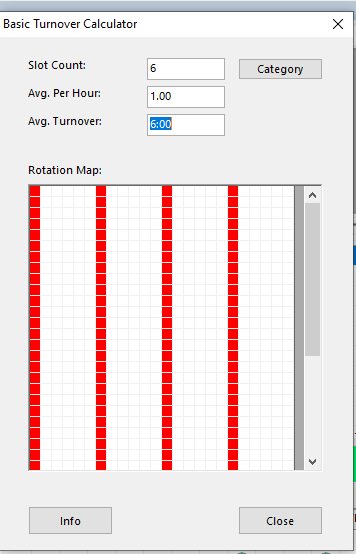
A category that has 6 songs in it and is called for once an hour in your clocks will rotate like this:

The same song plays at midnight, 6am, noon, and 6pm every day. Your ‘creatures of habit’ listeners are now living in Groundhog Day and they are hearing “I Got You Babe” every morning courtesy of your radio station. That’s no good. A 12-song category would hit at midnight/12p, etc. etc. This is bad math, rotationally speaking.

The easy answer is, fix your math. Instead of 6 songs played once an hour, play 5 or 7 songs, right? Typically, this is the way.
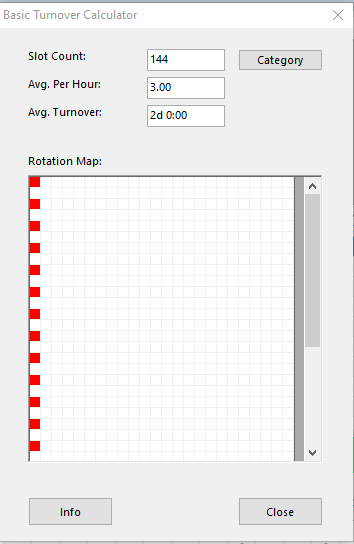
But what if you can’t fix the math? What if you are mandated to play 6 songs? Or let’s say you’ve done an auditorium test and you’ve now got 144 great-testing gold songs you want to play, but you use 3 an hour and that combination makes your rotation look like this?

Here’s where Autoburn can shine. Autoburn is designed to throw a proverbial monkey wrench in the works. How does it work? You decide where you’d like to ‘burn’ one or more songs to offset the poor rotation brought on by category size and clock calls.

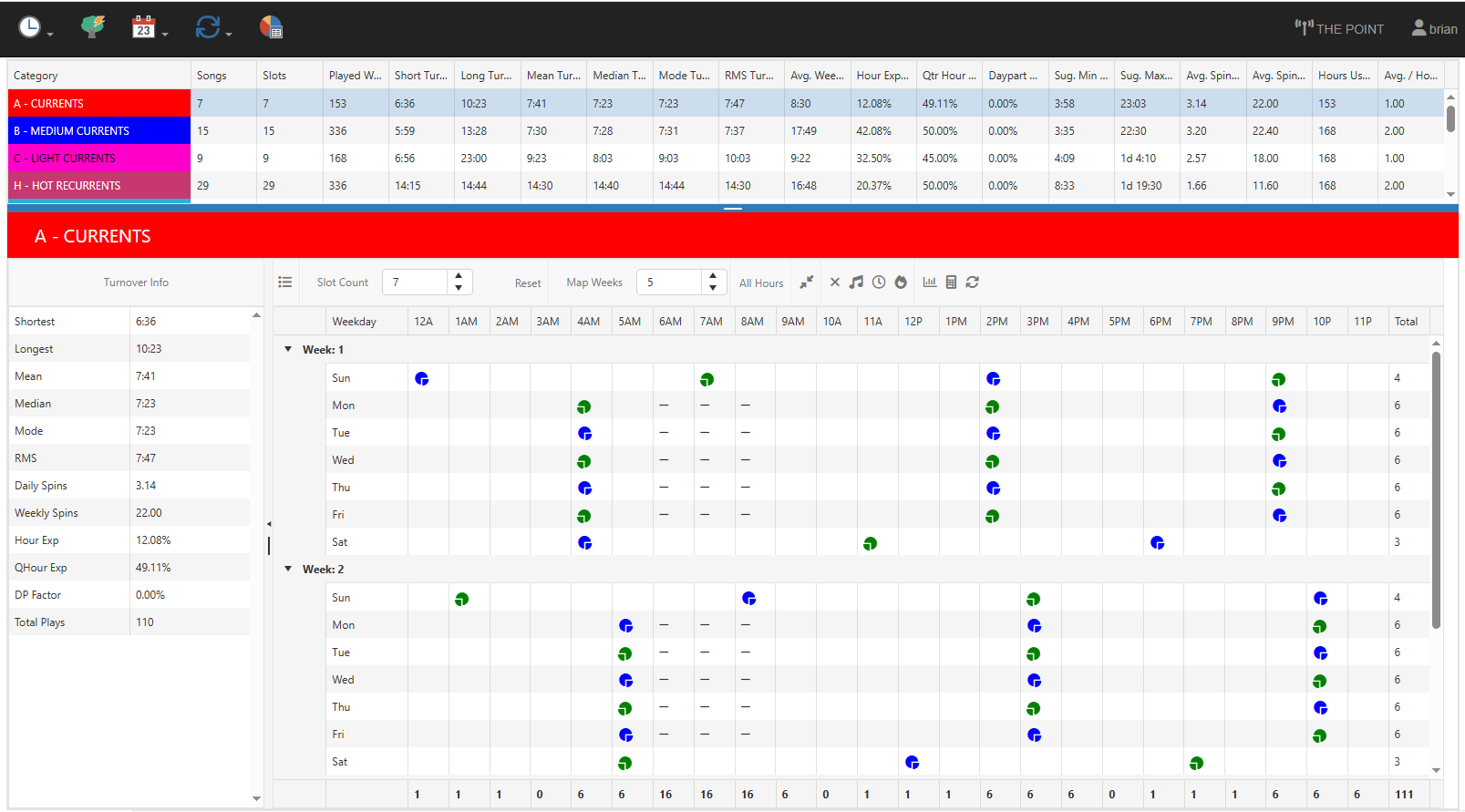
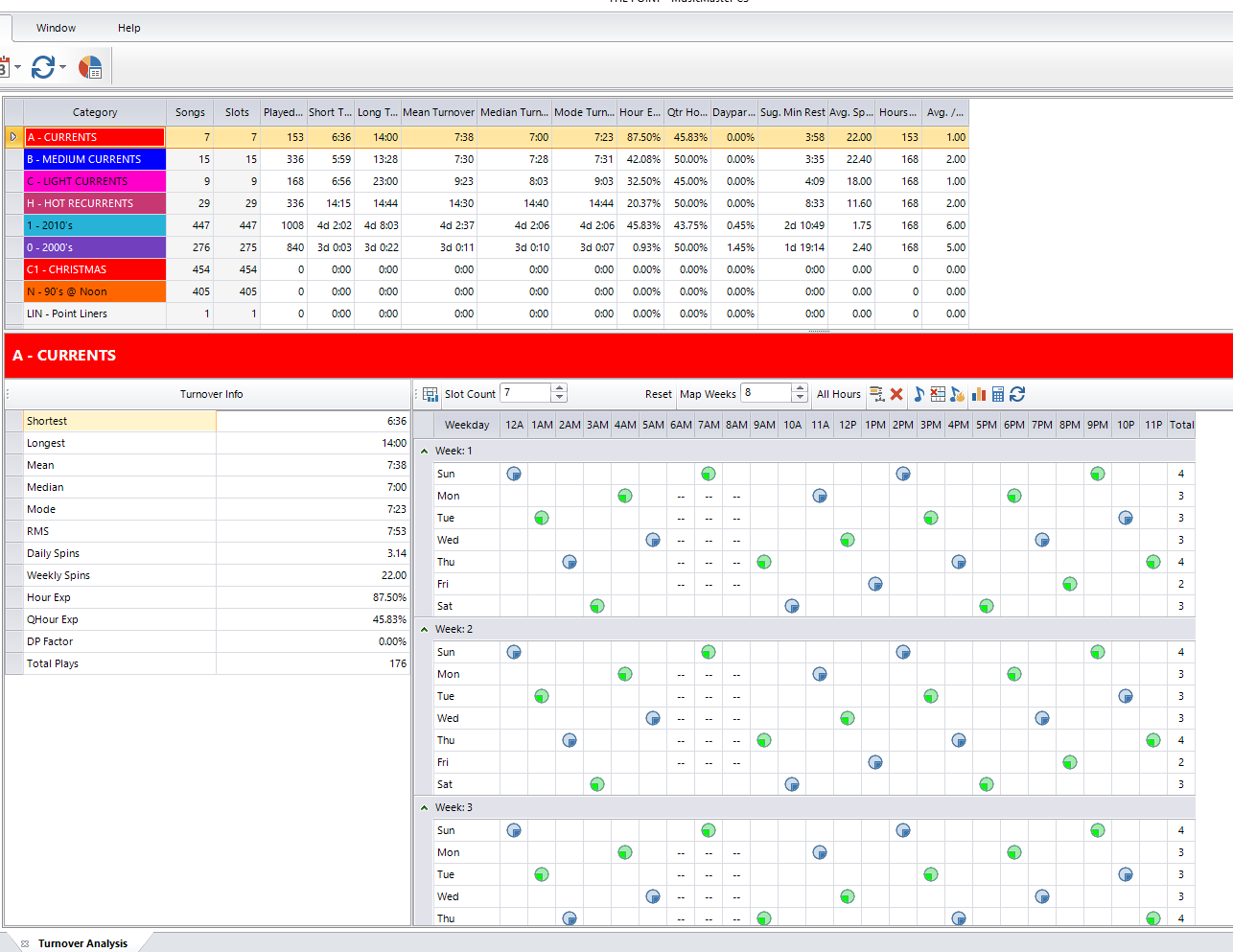
For example, you’ve got a 7-song current category that would rotate well, but you simply don’t play that category in your morning show. What should be a great rotation is fouled by the absence of your Power Category for three hours a day. Look at that stacking below! Hideous.

Turnover Analysis (shown in our Web Client) showing bad turnover:

But, if we simulate plays during those 3 hours a day, we can right the wrong.
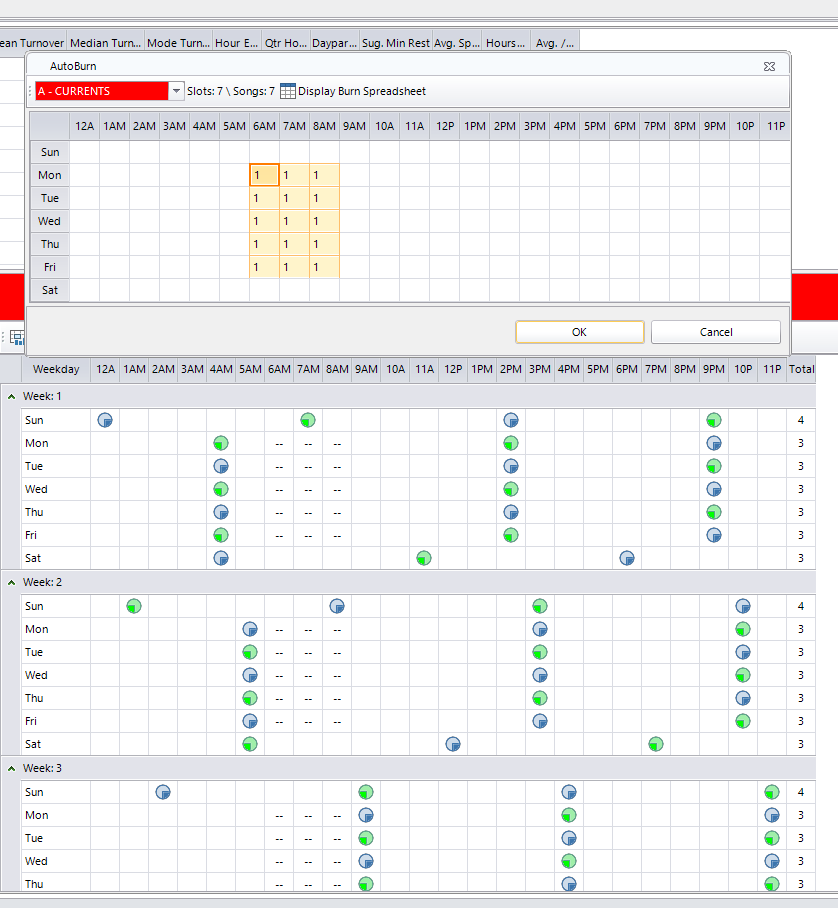
Let’s add an Autoburn of one song to the three hours of the morning show. The Autoburn skips the next current to play in each of those hours to perpetuate the good stair-stepping pattern that our good math would have provided had we actually played the song.

Shown in CS:

Click OK, and MusicMaster will recalculate the rotations now that there is an Autoburn setting to offset the three missed plays in the morning show. Here is the result of our Autoburn setting.


Ah, yes… that lovely stair-step rotation almost brings a tear to the eye. All is well again.

When your rotations aren’t quite right, the first thing I’d recommend is checking your math. Using the Turnover Calculator is a very handy tool for doing a lot of math for you. Make sure your category size, clock calls, and any other factors and influences such as Dayparting and Gold Recycling are as intended. If you’re certain that everything checks out and you still require a rotation adjustment, Autoburn may be the tool that makes the difference.

As always, feel free to reach out to your MusicMaster MSC for more information or assistance in applying this tool if you’d like some help.

Tags:

Managing Multiple Stations Just Got Easier With MusicMaster CS  posted on January 30th, 2026

by Jerry Butler

Anyone who has programmed multiple stations simultaneously understands how fast the hours in a day can slip away. You make music updates in one station, then you repeat the same changes in another, and then another. Add new songs, research changes, category adjustments, and seasonal music, and suddenly it feels like you spend more time duplicating work than actually programming.

MusicMaster CS was designed to eliminate that cycle.

Two key features can streamline your workflow across stations:

• Category Sync
• Station Distribution

They solve different problems, but together they streamline everything from routine updates to enterprise-level format management.

Why Programmers Use These Features

Category Sync: One Update, Many Stations

A diagram of a task

AI-generated content may be incorrect.

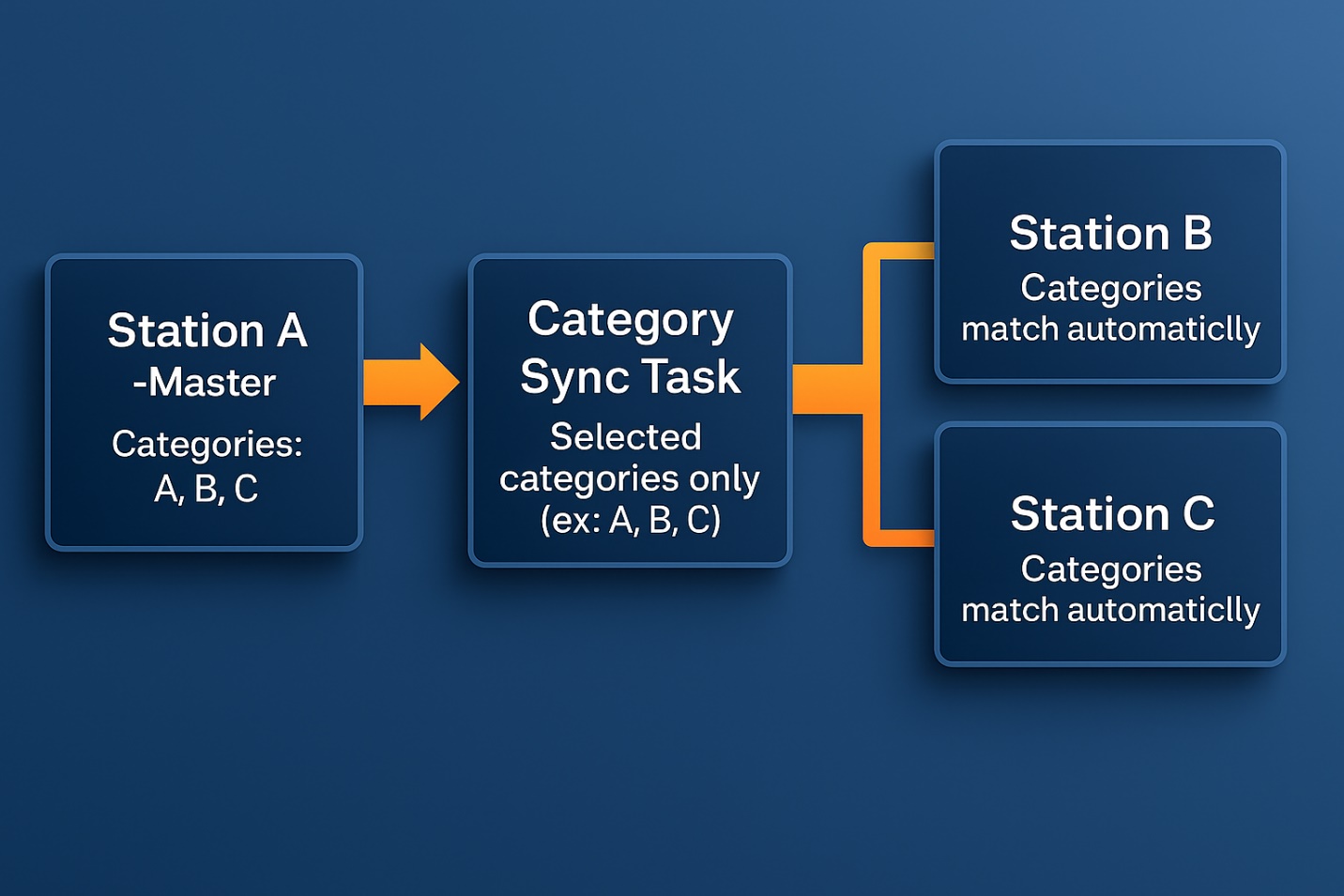
Category Sync allows you to make updates in one station and automatically share that information with any other station you choose.

Programmers rely on Category Sync because it removes the most time-consuming parts of multi-station management. You enter a new song once, and MusicMaster CS sends it exactly where it needs to go. Every station receives the same enterprise-level metadata, coding, research scores, etc. This keeps formats aligned, reduces manual repetition, and ensures accuracy across the entire operation. Since all stations draw from the same updated information, you avoid inconsistent coding or forgotten changes that can throw off rotations.

Category Sync is especially valuable for clusters with multiple versions of the same format because it establishes a common foundation that stays consistent and easy to maintain.

Station Distribution: Flexibility When Stations Are Similar, But Not Identical

A diagram of a station distribution

AI-generated content may be incorrect.

Station Distribution is designed for operations where stations share parts of a format but still require their own unique sound.

Programmers use this feature because it provides selective, controlled sharing. You can choose exactly which songs, based on custom filters that you choose, to distribute. The destination stations then have the freedom to make local adjustments without altering the original source station. This is ideal for stations that share core music but differ in regionally important titles, seasonal rotations, or specialty formats.

Station Distribution helps clusters maintain consistency while preserving the flexibility each programmer needs in their own market.

Now that you understand why programmers use these features, here is how you can set them up.

Setting Up Category Sync

A screenshot of a computer

AI-generated content may be incorrect.

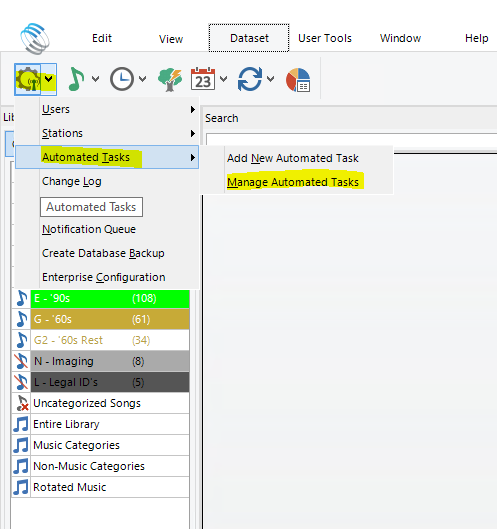
  • Click on the Enterprise gear Icon on the top left of your screen.
  • Go to Automated Tasks and click on Manage Automated Tasks. (You could also click Add New Automated Tasks)

A screenshot of a computer

AI-generated content may be incorrect.

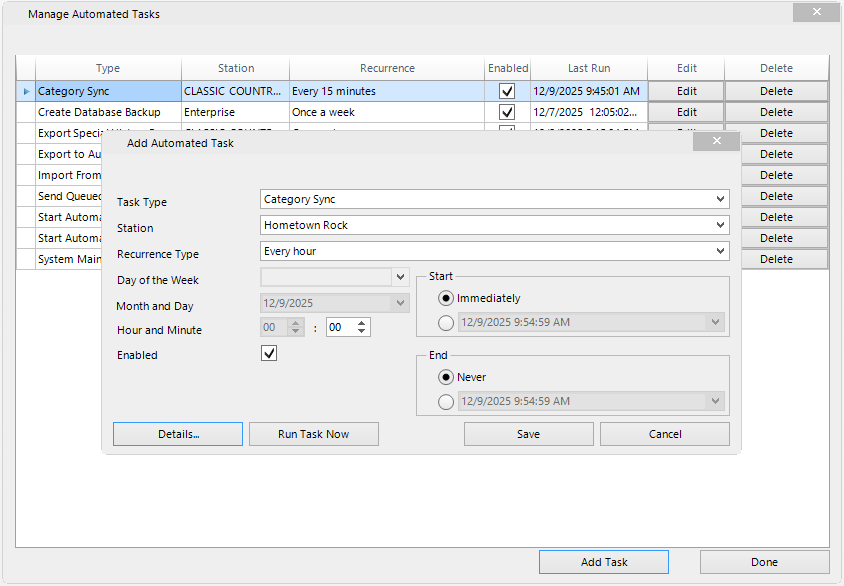
  • Click Add Task
  • Select Category Sync in the Task Type Dropdown Menu.
  • Choose your source station.
  • Select how often you would like to run the category sync.
  • Click Details.

A screenshot of a computer

AI-generated content may be incorrect.

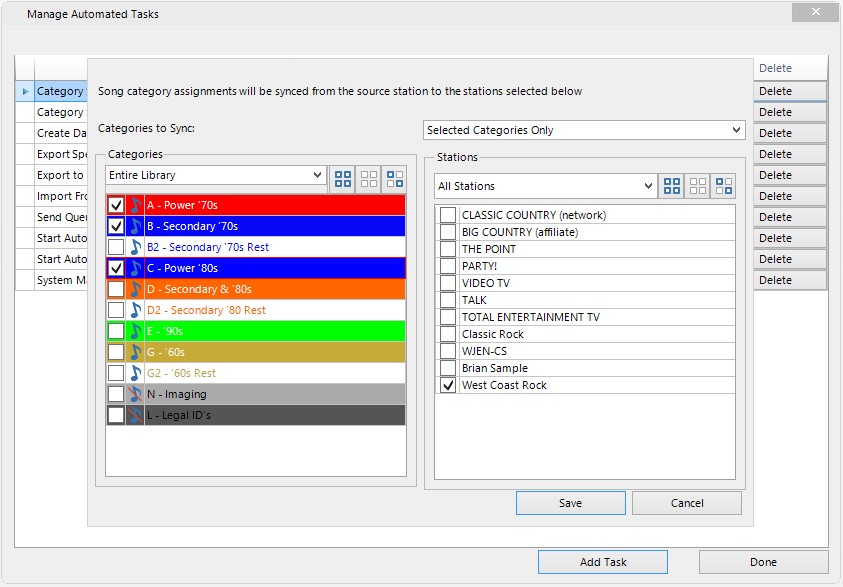
  • Select which categories you would like to sync between stations using the dropdown for all categories, music categories, non-music categories, or select categories only.
  • Select stations you want to update.
  • Save and MusicMaster CS handles the rest.

Station Distribution: Setting Up Patriotic Song Distribution Across Formats

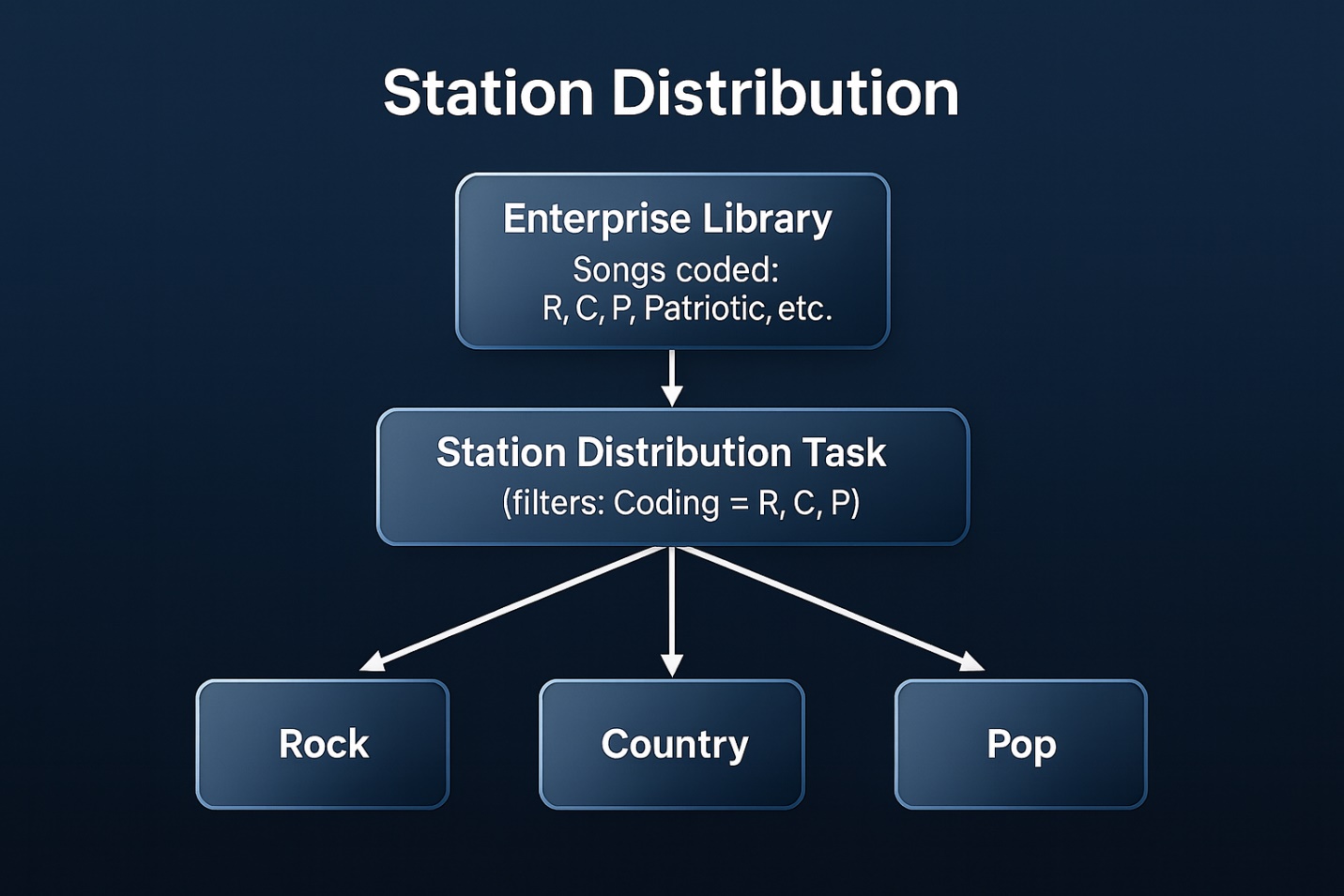
A diagram of a station distribution

AI-generated content may be incorrect.

This Is Where Station Distribution Shines

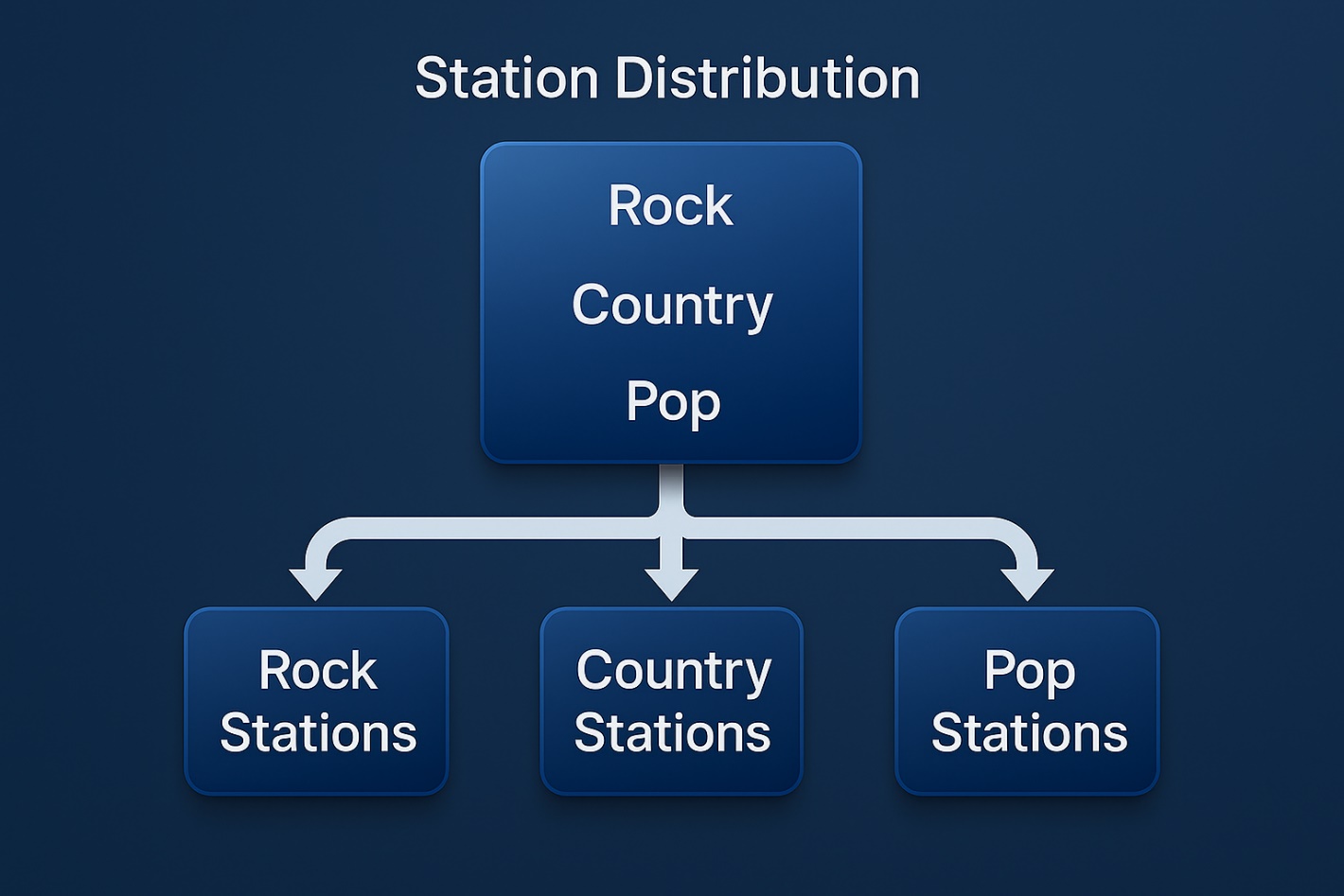
Let’s say you’re preparing music for a patriotic holiday weekend. The fields you use for your filters have to be enterprise-level fields so you can filter the library from the enterprise level. Station-level attributes won’t be visible in the Enterprise. For this case, we’ve already coded our library by genre and specialty:

• Specialty = Patriotic
• Genre = Rock / Country / Pop

Setting Up Station Distribution:

A screenshot of a computer

AI-generated content may be incorrect.

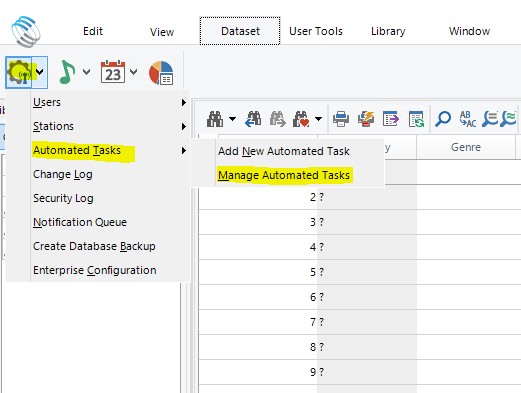
  • In the Enterprise, click on the Enterprise gear Icon on the top left of your screen.
  • Go to Automated Tasks and click on Manage Automated Tasks. (You could also click Add New Automated Tasks)

A screenshot of a computer

AI-generated content may be incorrect.

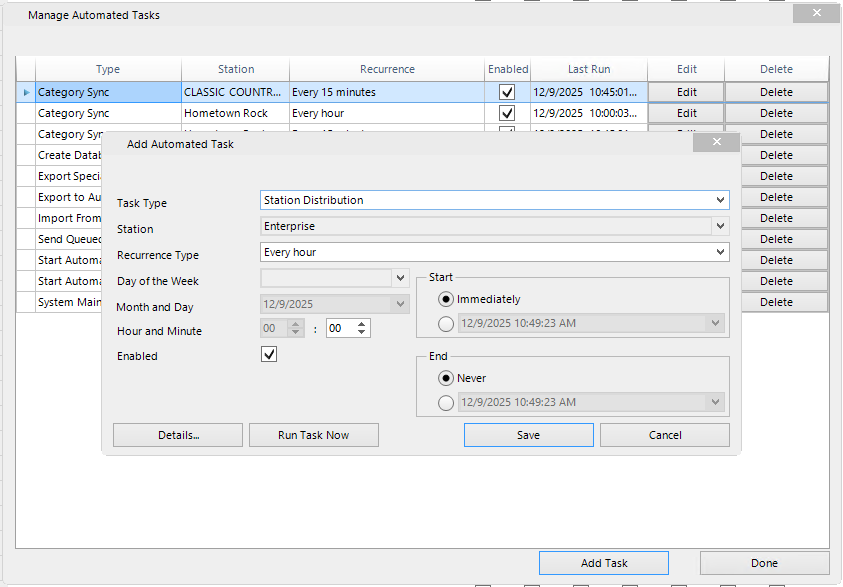
  • Click Add Task
  • Select Station Distribution in the Task Type Dropdown Menu.
  • Set how often you want this automated task to run under Recurrence Type.
  • Click Details.

A screenshot of a computer

AI-generated content may be incorrect.

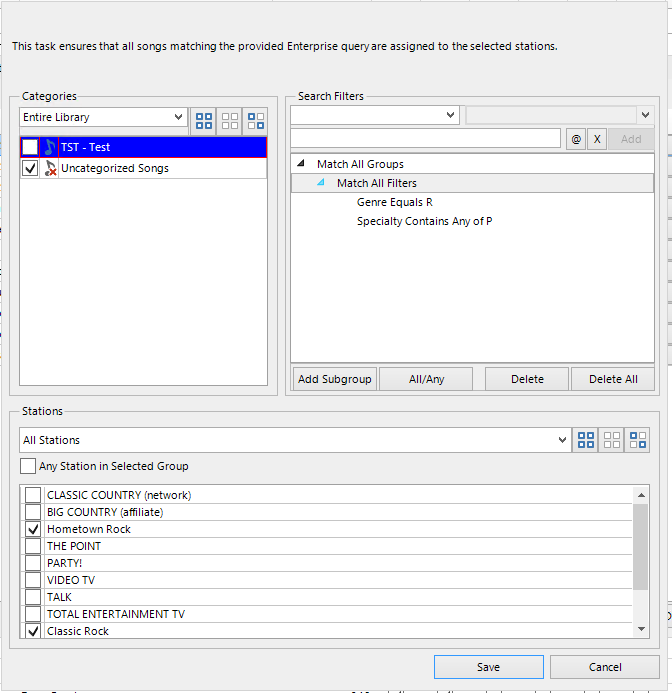
  • Select categories on the left.
  • Create your filters (ex: For this instance, we are using R for Rock in Genre and P for Patriotic song in Specialty.)
  • Select stations you would like to distribute the new songs to.
  • Save and let CS distribute automatically. New songs will be added to the uncategorized folder in the target stations.

Repeat these steps for each format, and songs will be distributed to the appropriate stations. This is just one example of how Station Distribution can be used. If you can filter it at the enterprise level, you can distribute.

As you can see, these powerful automation tools in MusicMaster CS allow you to manage multiple stations with greater consistency, accuracy, and efficiency. Whether your goal is to keep formats aligned through Category Sync or customize shared content with Station Distribution, these features reduce repetitive work and give you more time to focus on programming strategy. If you have questions or would like help setting up these features, contact your MusicMaster Scheduling Consultant.